
Australia’s Anti-Submarine Warfare Capability in the 2030s
Australia is undertaking what may be the most significant pivot towards anti-submarine warfare in its history, but the public debate remains fixed on nuclear-powered submarines and is missing where the real capability gaps sit. In this paper, Jennifer Parker assesses what is publicly known about Australia’s current and planned undersea warfare capability, and finds a picture that is both stronger and more fragile than the AUKUS conversation suggests.
Key findings
- Australia’s surface fleet has no operational towed array sonar. Neither the Hobart-class destroyers nor the ANZAC-class frigates operate towed array systems, which the paper describes as a major capability gap. It will not be closed until the Hunter-class frigates and upgraded Mogami-class frigates enter service in the early 2030s.
- A planned strategic towed array purchase appears to have lapsed. Australia was cleared in 2023 to acquire a SURTASS-E capability from the United States, but publicly available information suggests the purchase was cancelled on budgetary grounds. For a country with Australia’s maritime dependencies, Parker argues, this is a significant and unresolved gap.
- The workforce, not the hardware, may be the harder problem. The Royal Australian Navy moved away from developing deep specialist anti-submarine warfare officers in its surface fleet. Parker argues it will need to reinvigorate that expertise, and the accompanying mindset, to make use of the capabilities now on order.
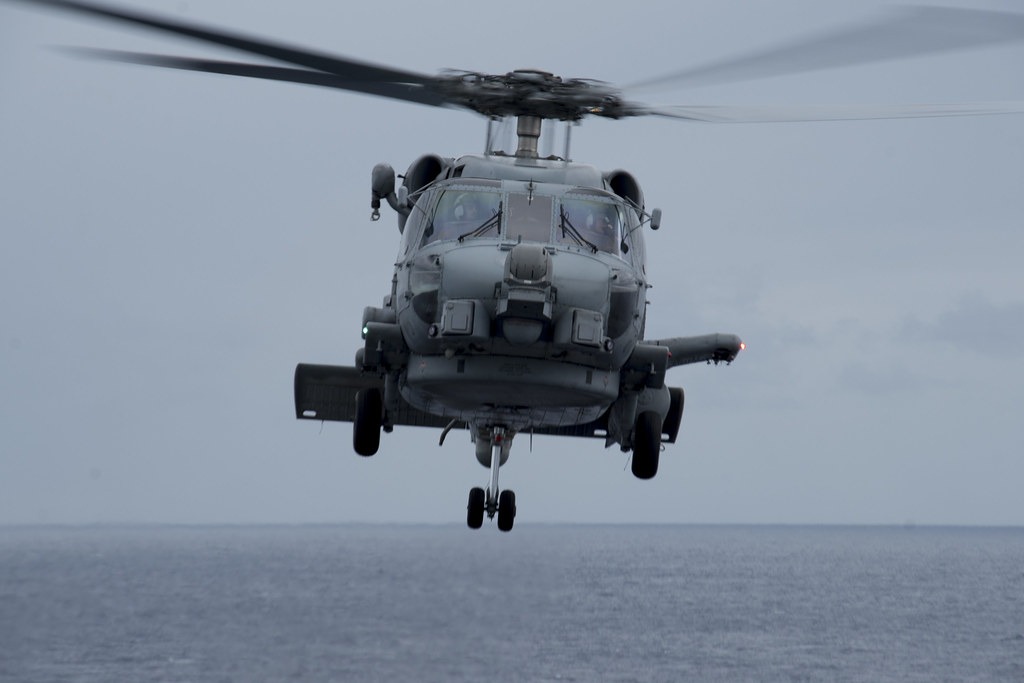
- Australia is investing heavily beyond AUKUS Pillar I. A A$1.7 billion package over five years for Ghost Shark extra-large uncrewed underwater vehicles, the Australian-built Speartooth large UUV, 36 MH-60R helicopters, 14 P-8A Poseidon maritime patrol aircraft and a new Maritime Autonomous Systems Unit together represent a broader undersea programme than the submarine debate captures.
- Geography narrows the problem, but does not solve it. Chinese submarines deploying towards Australia must transit a limited number of exits from the enclosed seas of East and Southeast Asia, offering focal points for surveillance. China’s expanding hydrographic survey activity across the Indian Ocean and the Pacific suggests it is preparing for exactly this operating environment.
Parker concludes that Australia’s planned investment through to the 2030s represents one of the most significant pivots towards anti-submarine warfare in its history, and that its comparative advantage lies less in any single platform than in the depth of capabilities it is assembling and its ability to fuse them with allies and partners.
About the Author
Jennifer Parker is a military analyst and former Royal Australian Navy warfare officer. She writes regularly on Australian naval capability and is a frequent commentator in Australian media.
The paper is the first in a series on undersea warfare and nuclear risk in the Asia-Pacific, supported by the Heinrich Böll Stiftung. All views expressed are those of the authors and do not represent the official views of HBS, the Asia-Pacific Leadership Network, or its board, members, or other funders.
The paper draws entirely on publicly available sources, including the 2026 National Defence Strategy, the 2026 Integrated Investment Program and AUKUS partner statements.
Image: “170716-N-RU971-070” by U.S. Pacific Fleet, CC BY-NC 2.0